TITLE:
How AI Automation Can Save Time and Fuel Growth for Small Businesses
BLOG:
Introduction
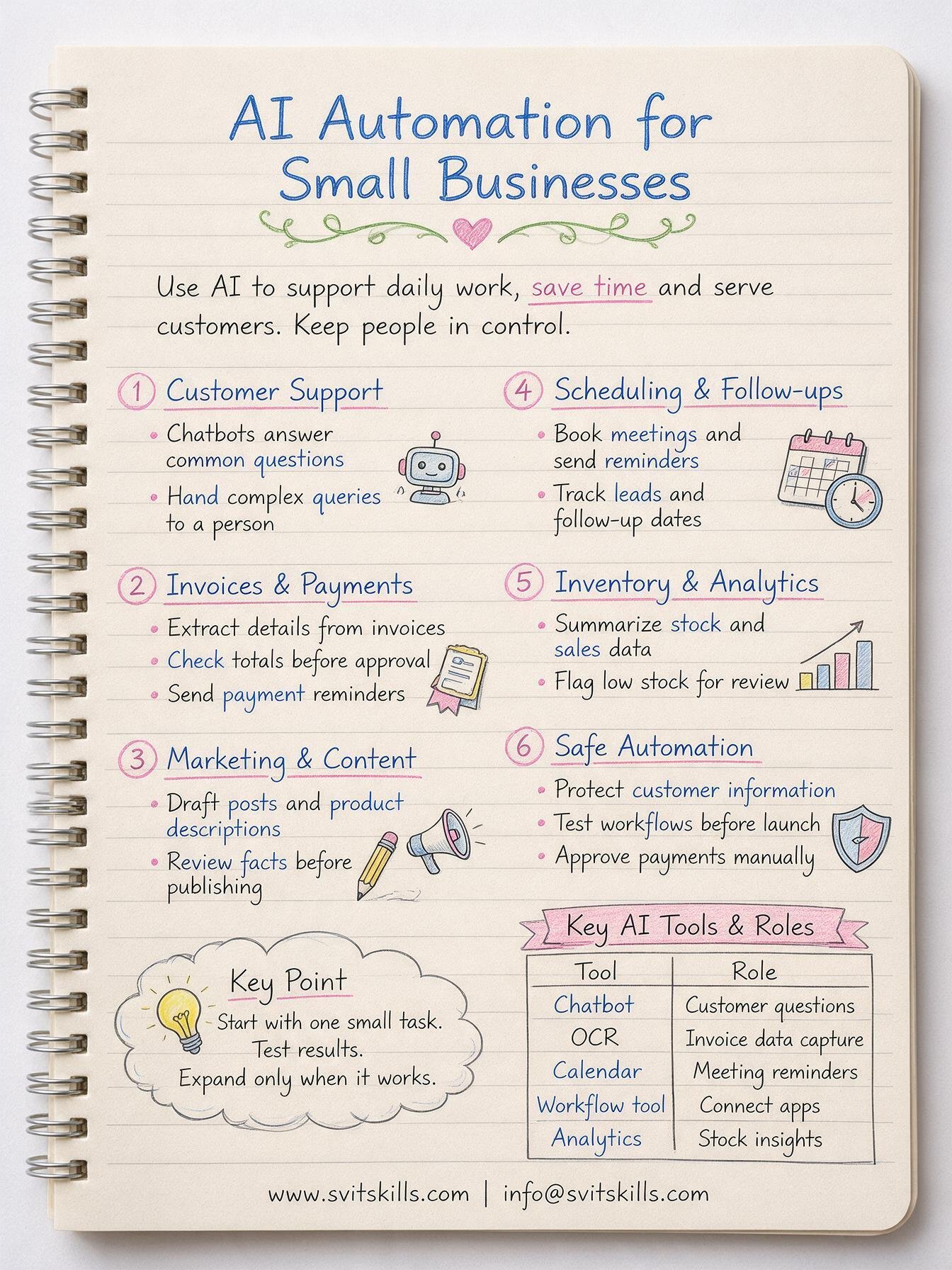
Small businesses often juggle many roles at once. From handling customer inquiries to tracking inventory, the workload can feel endless. AI automation offers a practical solution that lets entrepreneurs focus on strategy instead of repetitive tasks. In this article, we’ll explore how AI can streamline daily operations, provide real‑world examples, point out common beginner mistakes, and show why this technology is a growth catalyst.
What Is AI Automation?
AI automation combines artificial intelligence with automated workflows. It uses machine learning, natural language processing, and predictive analytics to perform tasks that traditionally required human intervention. Typical applications include:
- Chatbots that answer FAQs 24/7
- Automated invoicing and payment reminders
- Inventory forecasting based on sales patterns
- Lead scoring to prioritize follow‑ups
These tools reduce manual effort, lower error rates, and free up time for higher‑value activities.
Practical Examples for Small Businesses
1. Customer Support Chatbots
Imagine a boutique online store that receives dozens of support emails each day. An AI chatbot can instantly answer common questions about shipping, returns, or product details. By handling 60–70% of queries automatically, the business cuts response times from hours to seconds, increasing customer satisfaction.
2. Automated Billing and Payment Reminders
Freelancers and consultants often spend hours preparing invoices and chasing overdue payments. AI‑powered invoicing software can generate invoices based on project milestones, send payment reminders on schedule, and even flag late accounts. This eliminates the risk of missing deadlines and improves cash flow.
3. Inventory Management
Retailers who stock physical goods face the challenge of balancing supply and demand. An AI inventory system predicts future sales by analyzing historical data, seasonal trends, and even local events. It then suggests reorder quantities, reducing both stockouts and excess inventory.
4. Marketing Campaign Automation
AI platforms segment email lists based on customer behavior and send personalized messages at optimal times. By automating the nurture process, small businesses can see higher open rates and conversions without dedicating a full marketing team.
Common Mistakes New Learners Make
- Skipping the Data Clean‑up Step – AI is only as good as the data it receives. Inaccurate or incomplete information leads to wrong predictions, so spend time organizing spreadsheets or CRM entries before implementing automation.
- Over‑automating Too Soon – Not every task benefits from AI. Start with the most repetitive activities (e.g., answering FAQs) and monitor results before expanding.
- Ignoring the Human Touch – Customers still value a personal connection. Design workflows so that AI handles routine questions, but escalates more complex issues to a human agent.
- Underestimating Integration Effort – Many AI tools require API connections to existing software. Allocate time for setup and testing, or seek an integration partner if needed.
- Expecting Instant ROI – While time savings are immediate, revenue growth often takes a few months. Set realistic milestones and track progress.
How AI Drives Business Growth
Beyond saving time, AI automation influences growth in several key ways:
- Scalability – Automated processes can handle increased volume without hiring extra staff, allowing the business to serve more customers.
- Data‑Driven Decisions – Predictive analytics surface trends that humans might miss, enabling smarter pricing, product assortment, and marketing spend.
- Competitive Edge – Quick responses, accurate inventory, and tailored marketing position a small firm ahead of competitors that rely on manual methods.
- Employee Satisfaction – Removing repetitive tasks lets team members focus on creativity and problem solving, reducing turnover.
Getting Started with AI Automation
1. Identify Pain Points: List tasks that consume the most time and see if an AI tool can help.
2. Choose the Right Tool: Look for solutions that integrate with your existing platforms (e.g., Shopify, QuickBooks, HubSpot).
3. Start Small: Pilot the tool on one process, measure results, then expand.
4. Train Your Team: Provide quick tutorials so everyone knows when and how to intervene.
5. Monitor and Optimize: Use dashboards to track key metrics and adjust parameters as needed.
Conclusion
AI automation is no longer a futuristic concept reserved for large corporations. Small businesses that adopt thoughtful, data‑driven automation can dramatically cut operational time, reduce errors, and unlock new growth opportunities. By starting with clear goals, avoiding common pitfalls, and continuously refining their systems, entrepreneurs can create a scalable, efficient workflow that keeps them competitive in today’s fast‑moving market.
SOCIAL:
Discover how AI automation can turn your small business’s daily grind into growth‑driving efficiency. Start automating today and reclaim your time! #AIforSMBs #AutomationSuccess #SmallBizGrowth #DigitalTransformation #LearnWithSVITSkillsAcademy